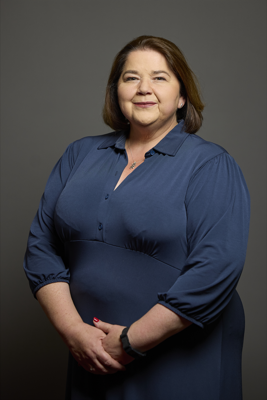
Assisted dying is where Julie Minns has broken from her party. She voted against the Terminally Ill Adults (End of Life) Bill at Second Reading in November 2024, and returned to rebel territory in May 2025 — voting for an amendment that would allow employers such as religious hospices to prohibit staff from facilitating assisted dying, and opposing a closure motion that curtailed debate on the Bill. Beyond that conscience issue, she has been an active local advocate: raising illegal shops on Carlisle's high street at PMQs, lobbying ministers to include MOD Longtown in munitions factory investment, and championing a private member's bill on voting accessibility for visually impaired constituents.
At 85% voting participation and 99.3% party alignment — her assisted dying votes aside — Minns is a loyal, engaged backbencher. Her 235 contributions across 187 debates place her above many first-term MPs; economy and jobs dominate her speaking record, followed by local government and health. Stance data shows her strongly aligned with progressive taxation and workers' rights, less so with business-friendly positions (12%) and tougher sentencing (23%). She sits slightly above her Labour colleagues on parliamentary scrutiny votes, suggesting mild but consistent interest in holding the executive to account.
Minns holds no select committee seat, which limits her formal oversight role. Local news coverage over the past 90 days is high-volume but broadly neutral in tone, spanning culture, crime, and transport — consistent with a constituency-focused MP generating regular local press rather than national controversy. Her highest-profile covered stories were largely positive pieces about constituent casework and local lobbying. Data on her surgical and surgery attendance records comes primarily from her own year-in-review article, so independent verification is limited.