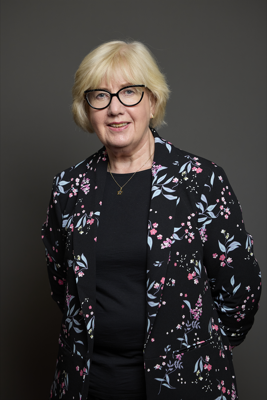
Ferguson's most significant recent actions concern welfare and end-of-life legislation, where she has broken from the Labour whip five times. In July 2025 she voted to extend protected benefit rates to people with fluctuating conditions — Parkinson's, MS, ME and cancer — under the Universal Credit reforms. On assisted dying, she consistently backed tighter safeguards than Labour's leadership accepted, voting to exclude applicants whose wish to die was driven by feeling a burden, a disability, or lack of care, while opposing an amendment from the Bill's own sponsor. Separately, she pressed the Defence Secretary in the Commons to secure a Norwegian frigate contract for Glasgow shipyards — a push that reached the UK Defence Journal.
A 96.3% party-line voter overall, Ferguson's deviations are concentrated in two areas: she sits 47 points below Labour's average on assisted dying access, and 23 points above on disability rights. Her participation rate of 78% sits below the Commons average. Speeches across 139 debates lean heavily on economy and jobs (53 contributions), defence (48), social care (39) and health (38) — a mix that reflects both her constituency's industrial base and her welfare concerns. She scores low on parliamentary scrutiny (12%) and civil liberties (16%), broadly backing the government's timetabling and law-enforcement positions.
Ferguson chairs the Scottish Affairs Committee and sits on the Liaison Committee, roles that place her at the centre of Westminster-Holyrood relations — a priority she flagged on taking the chair. Recent news coverage over the past 90 days is dominated by culture, community, crime and housing stories at near-neutral sentiment, suggesting steady local press presence without controversy. Her pre-2024 record as a Scottish Government minister is not reflected in the voting data available here, which covers only the current Parliament.