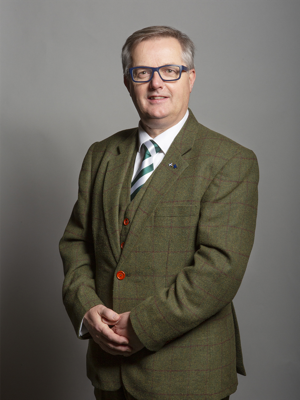
O'Hara's most striking recent action was voting against his own party on the WASPI women compensation issue in January 2025 — one of just two rebel votes in his entire parliamentary record. As a SNP member for Argyll, Bute and South Lochaber since 2015, he sided against an SNP procedural motion on the Women's State Pension age debate, a rare break in near-total party loyalty. Beyond that, he has been visible on constituency casework: raising nuclear safety transparency at Faslane with the Helensburgh Advertiser, advocating for constituents detained in Iran's Evin Prison as vice chair of the all-party arbitrary detention group, and speaking in Westminster on rural fuel costs — all issues with direct relevance to a constituency that includes the Clyde submarine base and large areas of remote Highland.
His parliamentary participation is low by Commons standards — he votes in around 30% of divisions, well below the typical MP. When he does vote, he follows the SNP line 99.4% of the time. His stance profile shows consistent opposition to immigration restrictions (0% aligned with immigration control measures across ten votes), strong support for workers' rights (91%) and trade union rights (100%), and firm opposition to fiscal tightening. He speaks frequently on defence — 60 contributions — which fits his constituency's proximity to Faslane, alongside economy and cost-of-living themes. He sits on no select committees.
His low vote participation may partly reflect the SNP's strategic approach to Westminster engagement, though it limits the picture data can draw of his legislative activity. News coverage over the past 90 days is too thin to establish a sentiment pattern, but earlier coverage is consistently positive, centring on local advocacy rather than national controversy. What the record shows clearly is an MP who rarely breaks ranks but uses his platform primarily for constituency-level pressure on defence accountability, international human rights, and rural economic issues.