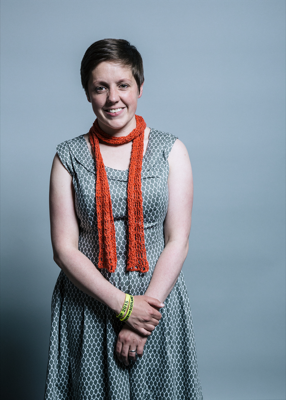
At 28% voting participation — roughly half the Commons average — Kirsty Blackman is among the least present MPs by division record, yet she has been active where she has shown up. In April, she acted as a teller against the government's asylum accommodation regulations and voted to refer Keir Starmer to the Privileges Committee over the Mandelson appointment. Earlier this year, she led a parliamentary debate demanding more support for North Sea workers facing job losses, directly challenging ministers on the "just transition" and drawing significant coverage from Scottish outlets. On the King's Speech, she voted with the SNP to reject Labour's legislative programme outright.
Her 100% party alignment means no rebel votes — every division she has entered, she voted with the SNP. Her stance profile shows consistent opposition to fiscal tightening (13% aligned with fiscal responsibility positions) and immigration control (0%), alongside strong support for workers' rights, trade union rights, and welfare expansion. Her speeches concentrate on social care, economy and jobs, fiscal policy, and cost of living — a profile that reflects both national SNP priorities and the specific pressures facing Aberdeen North, where the North Sea energy transition is a live local issue.
The low participation rate deserves context: SNP MPs routinely miss votes on England-only matters under the party's EVEL abstention approach, which will mechanically reduce their headline figures. Blackman has also been publicly visible on LGBTQ+ issues — she spoke to Diva Magazine about securing trans healthcare provision in Aberdeen — and she has raised constituent cases including the threatened closure of a local M&S store. Her committee role is limited to the Speaker's Conference. Recent news sentiment data covers only seven articles in 90 days, so the picture of her current profile is partial.