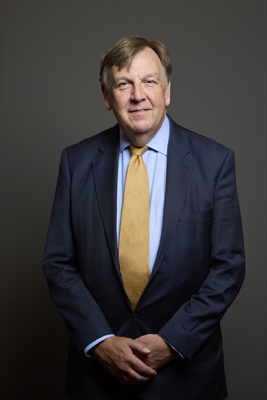
Whittingdale has been active on defence and national security in recent weeks, voting in favour of Conservative opposition motions calling for greater urgency on defence spending and backing several amendments to the Armed Forces Bill at Report Stage. He also voted against the government's timetable motion for the National Security (State Threats) Bill — backing more parliamentary scrutiny time — and supported amendments to preserve judicial oversight of the new state-threats powers. All of this sits within his party line; he has no rebel votes on record, voting 100% with the Conservative majority across 334 divisions.
His participation rate of 60% is below the Commons average, though 32 years in Parliament and a knighthood signal a longer career arc than most. His voting record leans strongly pro-business (95%), tough on crime (94%), and consistently against tax increases (100%), with no votes aligning with progressive taxation or the current government's agenda. He sits 33 percentage points above his own party average on armed forces welfare votes — the strongest deviation in his profile — and somewhat above it on civil liberties. His 217 speech contributions span economy, defence, culture and technology, reflecting a broad portfolio.
Whittingdale sits on the Foreign Affairs Committee, which sharpens the context for his national security and defence activity. His highest-impact local news coverage centres on NHS service changes in Essex, particularly the threatened future of St Peter's Hospital — he has secured a Commons debate on the issue and met NHS leaders alongside Dame Priti Patel. Recent local coverage (59 articles in 90 days) clusters around culture and sport rather than parliamentary work. All voting and speech data runs to mid-June 2026.