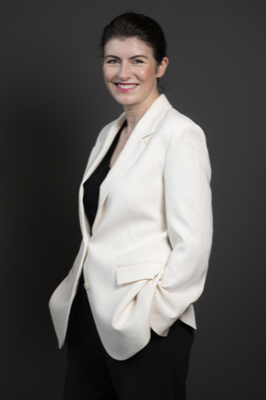
Promoted to a ministerial role within 14 months of entering Parliament — one of the faster rises among the 2024 intake — Walker has nonetheless drawn scrutiny over how she got there. Critics, including a former Welsh Labour council leader, pointed to her marriage to Keir Starmer's chief of staff Morgan McSweeney as a factor in her advancement, and her subsequent association with Peter Mandelson during a period of government controversy added to questions about her political positioning. Against that backdrop, her local casework record offers a different picture: she pressed the SNP Health Secretary directly on Lanarkshire NHS waiting times, securing a public apology, and has been active on the closure of Larkhall's last bank branch.
Walker votes with Labour 99.2% of the time — a strong party-line record — but has broken ranks twice on assisted dying, opposing the Bill at both Second and Third Reading when her party's majority backed it. A 70% participation rate sits slightly below the Commons average. Her stance profile flags an unusually low alignment on pro-parliamentary-scrutiny measures (6%) and tough-on-crime votes (24%), while she scores above her party average on fiscal responsibility and consumer protection. Her speeches concentrate on economy and jobs, local government, and social care — topics that map closely to constituency pressures in Hamilton and Clyde Valley.
She holds no committee seats, which is consistent with her ministerial appointment — government roles typically preclude select committee membership. News coverage from the past 90 days is too thin to show a current sentiment trend. The deviation data flagging lower alignment on anti-sexual-exploitation and armed forces welfare votes is notable but lacks sufficient context to interpret fully without debate transcripts.