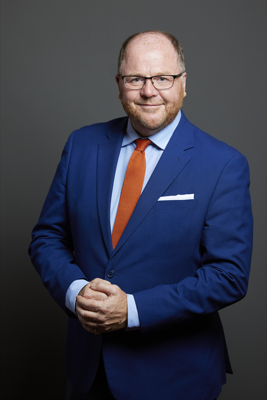
George Freeman draws attention for two contrasting reasons right now. In mid-2025 he referred himself to the parliamentary standards commissioner over "cash for questions" allegations — specifically, claims that he sought company input on parliamentary questions while advising those same firms, a conflict he had previously been warned about. That investigation casts a shadow over his profile even as he has pursued some genuinely high-profile campaigns: he confronted Big Tech executives in Parliament after becoming a victim of AI deepfakes, and has pushed legislation to address flooding caused by poorly planned housing on the edges of Norfolk towns. He also voted for the Terminally Ill Adults (End of Life) Bill at Second Reading in November 2024, one of the few conscience votes available to him as an otherwise near-total party-line Conservative.
His parliamentary participation rate — 50% of votes cast — sits well below the Commons average, which typically runs around 65--70%. When he does vote, he is a 99.6% party-line Conservative: opposed to tax increases, housing development, and workers' rights measures; strongly supportive of Lords scrutiny and business-friendly legislation. His deviations from Conservative colleagues are modest but telling: he votes more consistently on public health and parliamentary accountability than his party average, and his speeches cluster around economy and jobs, environment, local government, and agriculture — a mix that reflects both Mid Norfolk's rural character and his own policy interests.
Freeman sits on the Science, Innovation and Technology Committee, which fits his longstanding focus on life sciences and tech policy. His news coverage over the past 90 days — 102 articles, centred on health, the economy, and housing — averages close to neutral overall, with the standards referral dragging against more positive local coverage. The cash-for-questions investigation remains open; its outcome will significantly affect how his record in this parliament is judged.