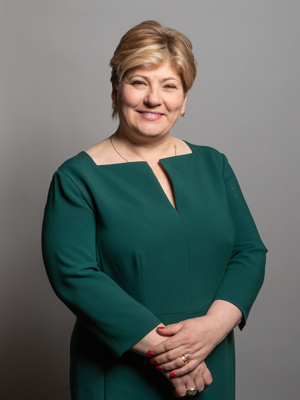
A high-profile MP who draws more attention outside the chamber than within it, Emily Thornberry has made her mark recently as Chair of the Foreign Affairs Committee. In March 2026 she led the committee's report warning that "open liberal democracies are sitting ducks" against foreign disinformation, calling for increased government funding and a coordinated response to Russian information warfare. She also appeared on BBC Question Time in January to a round of applause for a forceful critique of Donald Trump's remarks about British veterans — and in April she publicly broke with her own government in an op-ed arguing it must "think again" on immigration reform, citing specific constituent cases.
In the chamber, Thornberry votes with Labour every time — a 100% party-line record — but participates in only around half of all divisions, below the Commons average. Her speeches lean heavily towards defence (90 contributions), economy and jobs, and immigration. Her stance profile shows strong alignment with workers' rights and progressive taxation, but she votes against the pro-business position in roughly 95% of relevant divisions and scores notably low on climate action (31%), well behind her party's average of 57%. She backs assisted dying access and immigration controls at rates considerably above Labour's average.
Thornberry's committee chair role is the clearest lens through which to read her parliamentary activity: the foreign affairs and national security focus of her speeches, and her votes on the National Security (State Threats) Bill, all fit that brief. Her 51% participation rate partly reflects the demands of chairing a select committee rather than simply attending division lobbies. Recent news sentiment data across the past 90 days is broadly neutral, with no strong positive or negative local press pattern.