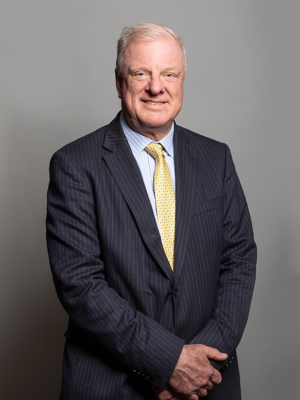
One of Westminster's most striking data points on Edward Leigh is how rarely he breaks with his party — just once on record — while simultaneously holding some of the most right-leaning stances in the Conservative parliamentary group. That single rebel vote came in July 2026, when he acted as a teller against his own side on a motion concerning the early release of prisoners, consistent with his 90% alignment on tough-on-crime votes. More recently, he backed a string of Conservative amendments to the National Security (State Threats) Bill, including clauses designed to preserve judicial oversight and resist government timetabling restrictions — reflecting his 89% alignment on parliamentary scrutiny measures.
At 63% voting participation, Leigh falls below the Commons average, though his 441 contributions across 256 debates suggest he remains an active speaker. Economy and defence dominate his speech record, followed by crime, immigration, and local government. His stance profile is sharply ideological: 100% aligned on anti-tax and pro-business votes, 0% on progressive taxation, and near-zero on workers' rights and climate action. He diverges from his party colleagues by voting notably less often in favour of armed forces welfare measures (33% versus a party average of 67%) and assisted dying access.
As Father of the House — the longest-continuously-serving MP, elected in 1983 — Leigh carries institutional weight that shapes how his positions land publicly. Recent coverage has been mixed: a 2025 guilty plea for injuring a police officer with a car door attracted negative coverage, while a 2026 statement in support of the Jewish community drew positive attention. His 2022 comments opposing Ukrainian refugee resettlement brought significant local backlash, including from fellow Conservatives. News sentiment over the past 90 days is broadly neutral across 15 articles. Committee data shows membership of the Panel of Chairs only.