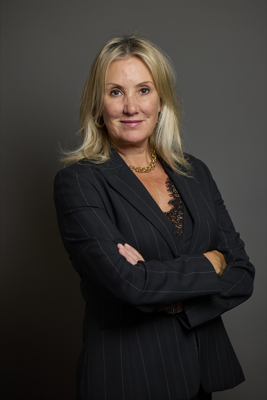
Dinenage's most striking recent moves were on conscience votes, where she broke from the majority of her Conservative colleagues twice in a single day. On 17 June 2025, she voted against requiring women to attend in-person appointments before receiving abortion pills, and backed removing women entirely from criminal liability for acts relating to their own pregnancy — a position most Conservative MPs opposed. Earlier that month, she voted against several amendments to the Assisted Dying Bill that her party backed, placing her firmly in the pro-access camp; her deviation from Conservative colleagues on assisted dying stands at 75 percentage points, the largest gap in her profile. These are not isolated rebellions: they reflect a consistent pattern on social policy.
Beyond those conscience votes, she is a 97% party-line voter and broadly follows Conservative positions — opposing workers-rights measures, carbon budget regulations, and employment tribunal reforms, while backing parliamentary scrutiny and business-friendly legislation. At 59% voting participation she sits below the Commons average, though committee chairs routinely miss chamber votes due to other duties. Her 209 contributions across 131 debates are spread across economy, culture, health, and social care. She chairs the Culture, Media and Sport Committee and sits on the Liaison Committee, roles that explain her heavy speech activity on culture topics and relative absence from some chamber divisions.
Local coverage — running at 43 articles over 90 days — has been largely positive where her own role features. She secured a Commons debate on funeral sector regulation following a Gosport case, lobbied for pub sector support, and pushed for faster enforcement of the Online Safety Act. Her former role as care minister adds credibility to her ongoing carers-rights advocacy. Crime-related coverage (14 articles) carries a near-neutral tone, suggesting mixed or contested local issues rather than clear wins or controversies.