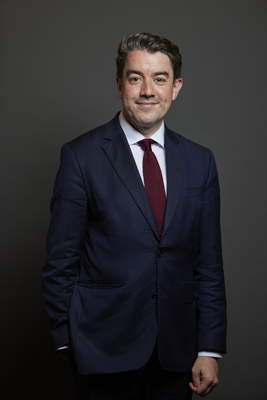
Strickland broke from Labour on nearly every assisted dying vote in June 2025 — his most notable act of rebellion since entering parliament. He opposed the Terminally Ill Adults Bill at Third Reading, voted for tighter eligibility safeguards (including blocking applications driven by fear of being a burden or by disability), and rejected amendments backed by his own party majority. His stance places him well outside Labour's centre of gravity on this issue: he scores 67% on an anti-assisted-dying measure against the party average of 46%, and just 13% on pro-access measures against the party's 58%. On most other things he votes with the government — a 97.9% alignment rate overall.
His parliamentary record is broadly active, with an 88% participation rate above the Commons average. Economy and jobs dominate his speeches, followed by defence and local government. He scores 100% on progressive taxation votes and 86% on workers' rights, but sits well below the Labour average on parliamentary scrutiny (14%) and civil liberties (16%), suggesting he reliably backs government positions on how legislation is handled rather than pushing for extra oversight. He deviates from his party on disability rights — scoring 33% against a party average of 10% — a pattern consistent with his assisted dying votes.
Outside the chamber, Strickland has received consistently positive local coverage for constituency work: he campaigned publicly to keep the Hitachi Rail factory in Newton Aycliffe open (securing a £500m deal), backed heritage railway status for the Stockton and Darlington line, and raised safeguarding concerns that led a children's home application to be withdrawn. He holds no select committee seat. News volume is high (70 articles in 90 days) but sentiment is broadly neutral, with crime coverage the largest category.